
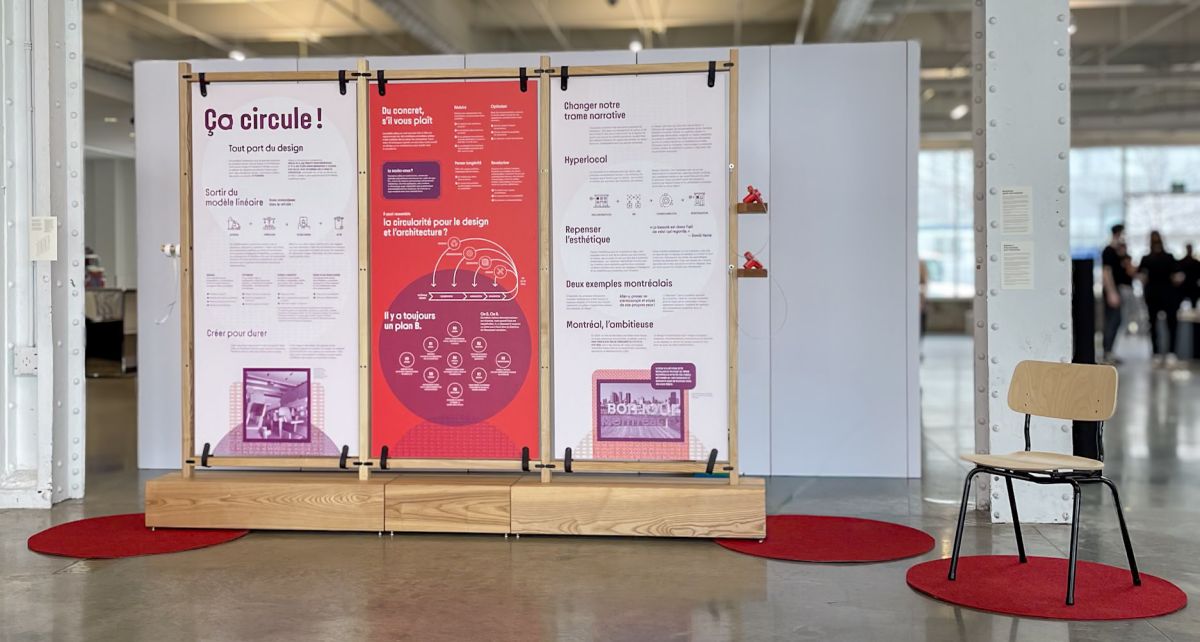
This backgrounder presents the content of the travelling exhibition Ça Circule! designed by Rümker. The project was selected as part of the call for proposals Developing a Stronger Design Culture, Together (3rd ed.), which received financial support from the Government of Québec and the City of Montréal under the Entente de développement culturel de Montréal.
More information about the call for proposals is available here.
Circular economy applied to design and architecture
The circular economy proposes a transition from a linear model – extract, produce, consume and discard – to a model that seeks to preserve resources and their value for as long as possible. In the fields of design and architecture, this transition calls for a rethink of how products, materials and buildings are designed, used and transformed, with a view to extending their lifespan, promoting their reuse and, ultimately, reducing the reliance on new raw materials.
Towards an approach to reuse
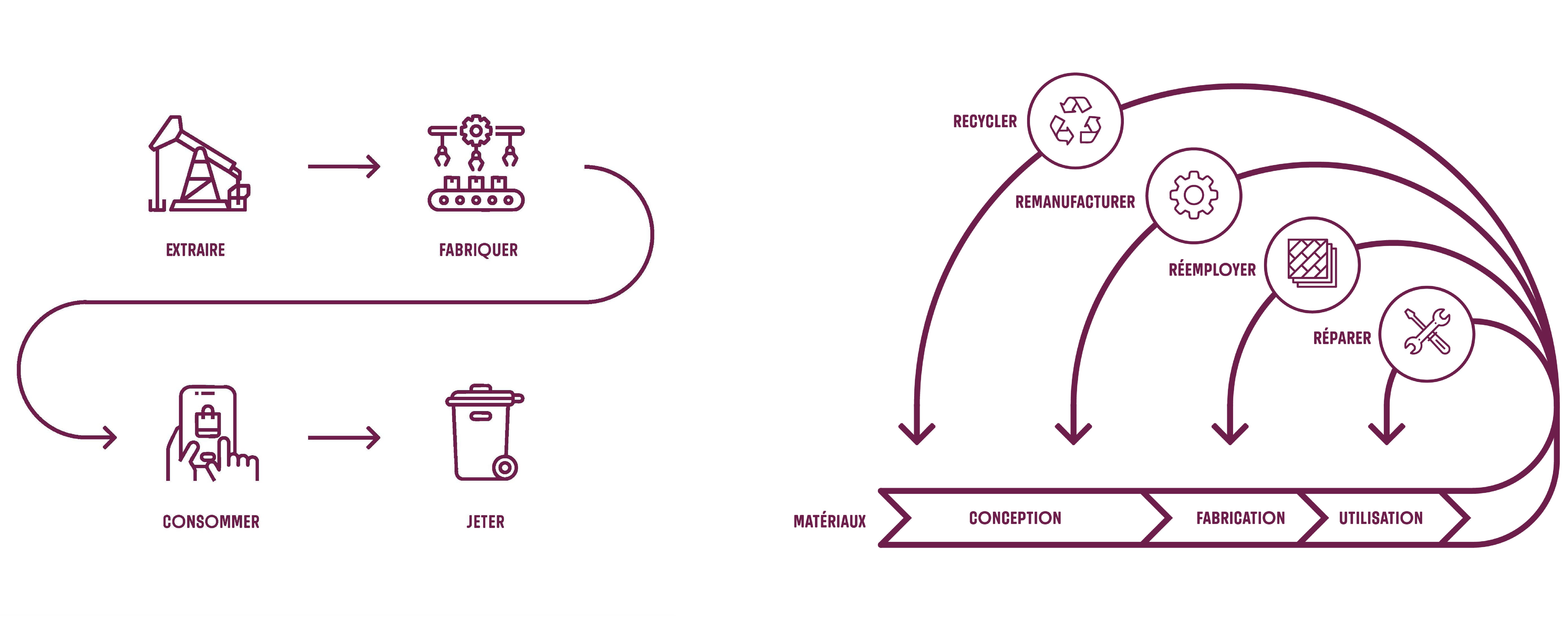
The linear model places increasing pressure on resources and ecosystems: a shortage of raw materials, the accumulation of waste and a rise in environmental impacts.
The circular model makes the most of what already exists by extending the lifespan of resources, encouraging their reuse and reducing the extraction of new materials.
The circular economy applied to design and architecture
Designed to adapt and transform itself in new settings, the travelling exhibition is aimed at anyone eager to better understand circular-economy principles and incorporate them into their practice. It is a concrete tool for raising awareness and prompting action.
It explores circularity in design and architecture not as an abstract concept, but as a concrete, dynamic and inspiring practice—an approach whereby every step in the process becomes a lever for transition.
Too often, designing something to last is an easy solution: one that works right away, but not for long. Thinking in terms of loop means also considering things over time.
Every little bit counts!
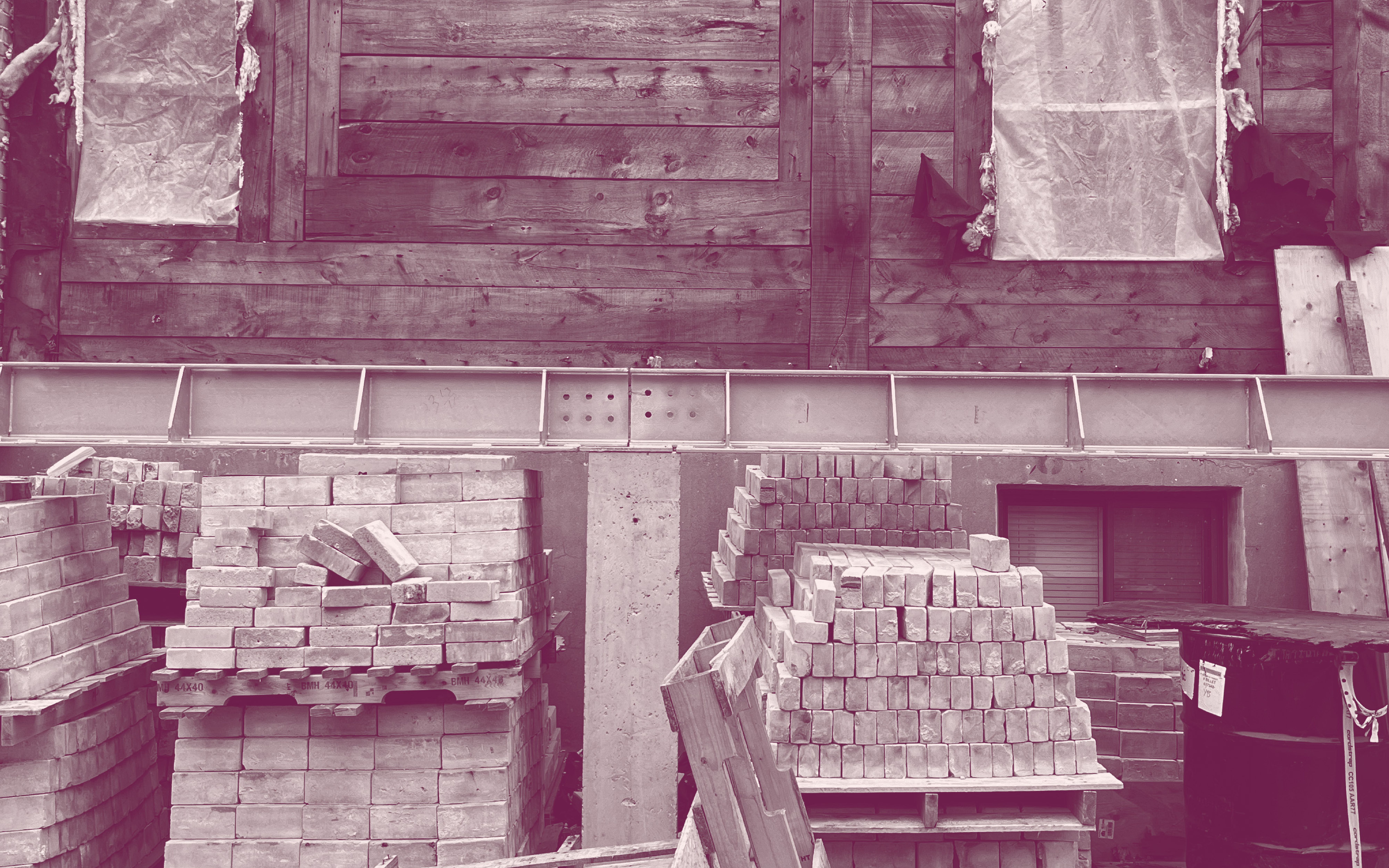
Circularity does not rely on a single major transformation, but on a multitude of decisions which, when taken together, can change the course of a project. In design and architecture, these decisions begin right from the conception stage: the choice of materials, assembly methods, intended uses, lifespan, maintenance, reparability and even the potential for reuse.
This is where design plays a decisive role. Nearly 80 per cent of a product’s environmental impacts are said to be determined at the design stage. Designing, therefore, also means choosing what can last, be transformed, repaired, reused or repurposed. The project thus becomes a tipping point: every choice can pave the way for a more sustainable use of resources.
There isn’t always just one right answer. There is often a plan B, C or D. To guide these choices, we can draw inspiration from the 3RV-E hierarchy, a Québec principle that establishes an order of priority for waste management: reduction at source, reuse, recycling, recovery and, as a last resort, disposal. This hierarchy, promoted by RECYC-QUÉBEC and enshrined in Québec’s waste management framework, encourages a focus on actions that prevent the generation of waste and preserve the value of resources for as long as possible.
When applied to design and architecture, this approach opens up a wide range of possibilities: avoiding or reducing the use of materials, preserving and reusing what already exists, repairing, refurbishing, reconditioning, designing assemblies that can be dismantled, or even planning for the recycling of materials at the end of their life. The aim is not to find a perfect solution, but to seek, at every stage of the project, the course of action that best preserves resources and their value.
About Rümker
Rümker is a strategic design studio notable for its expertise in circular-economy principles and a workshop-based approach. Working at the intersections of design, museum experiences and strategic coaching, its team transforms complex ideas into tangible, accessible and engaging experiences.
Focused on both content and context, Rümker’s designers create spaces and routes where visitors do more than just look around. They feel. Understand. Immerse themselves. Each project is grounded in a finely tuned understanding of the target audience, usage patterns and context, yielding compelling and meaningful solutions.
From ideation to implementation, Rümker co-ordinates strategy, design and execution with diligence, creativity and care. The goal: create human-centred experiences that leave a lasting impression and generate positive, sustainable impacts.